
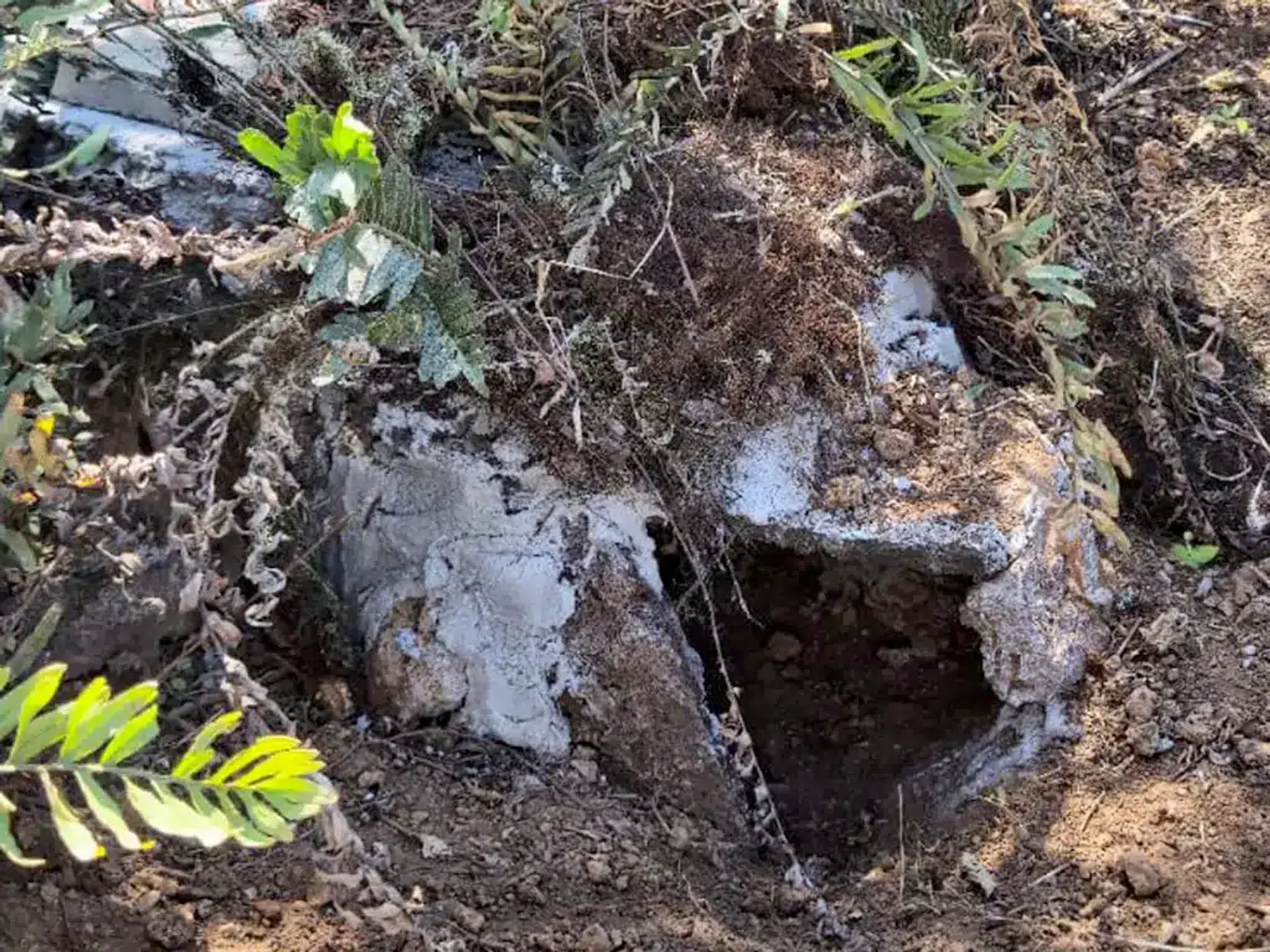
A comprehensive conservation initiative protecting the critically endangered Galápagos Petrel through habitat restoration, predator management, and innovative acoustic attraction technology.
The Galápagos petrel is a seabird few visitors get to see, but that may soon change. With nesting activity recently confirmed on our property (June 2025), guests at Galapagos Safari Camp may soon have the rare opportunity to hear, and perhaps even observe, this elusive species up close.
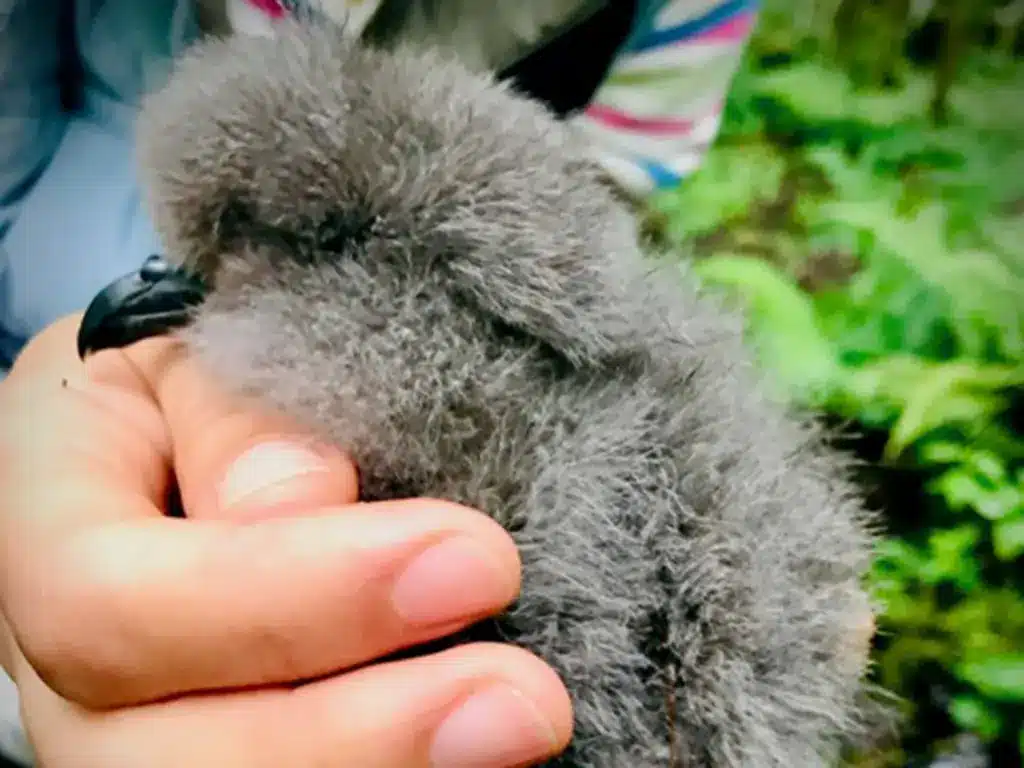
Galápagos petrels spend the first five to six years of their lives entirely at sea, riding ocean winds and feeding on squid and small fish. Thereafter, they return to the islands just once a year, and under the cover of night, to breed.
Unlike many birds, Galápagos petrels don’t build open nests. Instead, they dig burrows into the earth, ending in a chamber where they lay a single egg each season. Both parents share incubation and feeding duties until their chick is ready to fledge.
Such nests have been found in the highlands of five islands in the Galápagos: Santa Cruz, Floreana, Santiago, Isabela, and Santa Cruz.
Once grouped with the Hawaiian Petrel and known as the “Dark-rumped Petrel,” the Galápagos petrel (Pterodroma phaeopygia) was recognized as a distinct species by the American Ornithologists’ Union (AOU) in 2002, following genetic, vocal, and behavioral studies including Browne et al. (1997). The Galápagos petrel retained the name Pterodroma phaeopygia, while its Hawaiian counterpart was reclassified as Pterodroma sandwichensis.
Petrels on different islands show slight differences in seasonal timings and behavior, which some scientists are studying for potential future taxonomic significance.
Note: Some older sources refer to the Galápagos Petrel as Pterodroma galapagensis. However, the currently accepted scientific name is Pterodroma phaeopygia, as recognized by the IUCN and other leading taxonomic authorities.
Galápagos petrels aren’t just interesting because they’re rare. They play a key role in island ecology by transporting marine nutrients inland, much like giant tortoises do in reverse. As indicators of ocean health, their presence tells us something larger about the state of the islands’ ecosystems.
As apex predators of the marine food web and nutrient vectors between ocean and land, petrels contribute to ecosystem connectivity across the archipelago. Their burrows also create microhabitats that benefit endemic invertebrates and contribute to soil aeration in highland forests. The decline or loss of petrel populations would represent not only the extinction of an endemic species but also the disruption of critical ecological processes that have shaped Galápagos ecosystems for millennia.
Yet their survival remains precarious. Listed as critically endangered, the Galápagos petrel is threatened by habitat loss, introduced predators, invasive species, and light pollution (petrels can become disoriented by artificial lights, increasing mortality).
In the 1970s, only six nests were recorded in Santa Cruz’s main colony at Media Luna and Cerro Crocker, with no chicks successfully fledged due to heavy predation by introduced rats. At the time, the species was feared to be on the brink of extinction.
Black rats (Rattus rattus) and feral cats pose the most immediate threat to nesting petrels. Rats prey on eggs and chicks, while cats can kill adult birds as they return to their burrows at night. Historical records indicate that rat predation alone was responsible for near-total breeding failure in the 1970s.
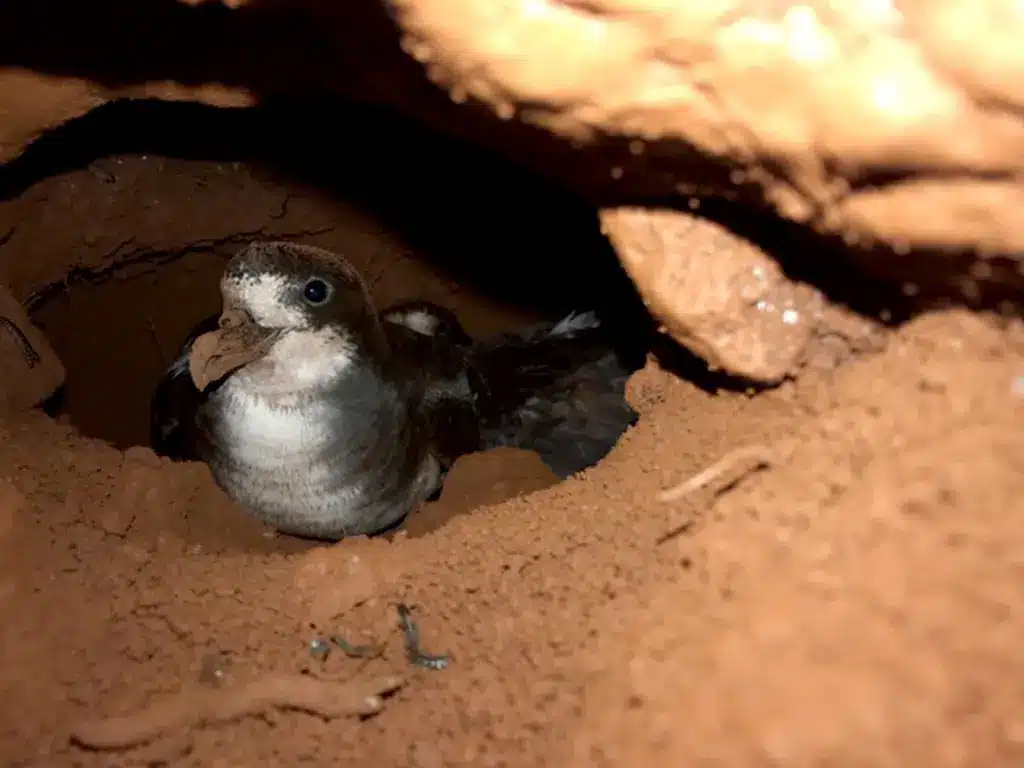 Ongoing predator control is essential to maintain safe nesting habitat for petrels in the highlands.
Aggressive invasive plants such as blackberry (Rubus niveus), guava (Psidium guajava), and cedrela (Cedrela odorata) outcompete native vegetation, degrading the Scalesia and Miconia forests that petrels depend on for nesting. These invasive species alter soil structure, reduce native plant cover, and create conditions unfavorable for burrow excavation and maintenance.
The conversion of highland forests to agricultural land and pasture has resulted in extensive habitat loss. Livestock grazing compacts soil, making burrow excavation difficult, while trampling can collapse existing nest chambers. Agricultural activities also introduce fertilizers and pesticides that may affect petrel prey species in surrounding marine environments.
Fledgling petrels and adults returning to colonies at night can become disoriented by artificial lights from nearby towns and agricultural settlements. Disoriented birds often collide with structures or become grounded, where they are vulnerable to predation, vehicle strikes, and dehydration.
Today, there are more than seven hundred nests in the Media Luna colony and surrounding sites in the highlands of Santa Cruz. It’s a remarkable recovery and a testament to what decades of dedicated conservation can achieve.
And yet, it is still not enough to upgrade their status from ‘Critically Endangered’. While the Galápagos National Park continues to protect the petrels within the park boundaries, many nests are located on private land, beyond the Park’s direct control.
To address this, conservation biologist Carolina Proaño launched the Galápagos Petrel Project, an initiative focused on education, research, and collaboration with landowners.
Their work includes year-round burrow surveys, predator control, the construction of stable artificial nest burrows, and close cooperation with highland farmers, where many nesting sites are found. By raising awareness and supporting landowners in taking action, the Galápagos Petrel Project extends safe habitat beyond the boundaries of the National Park.
While the Galápagos National Park protects approximately 97% of the archipelago’s land area, critical petrel nesting habitat exists on the remaining 3% of privately owned agricultural and residential land. Conservation on private property is therefore essential to the species’ long-term survival.
Private landowners, including Galapagos Safari Camp, play a vital role in implementing conservation measures such as:
This model of private conservation complements public protected areas and demonstrates how ecological restoration and sustainable tourism can coexist with biodiversity protection.
We are proud to share that this work is now underway at Galapagos Safari Camp.
In recent years, a small number of Galápagos Petrel nests have been identified within the grounds of Galapagos Safari Camp, a promising sign that the land we’ve been restoring from a former cattle farm is becoming rewilded once again.
The discovery was made by Carolina and her team at the Galápagos Petrel Project, who confirmed the presence of burrows perched on a rocky ledge overlooking our water reservoir. These nests lie quietly in wait for their seasonal residents, expected any day (June 2025). After last year’s challenging conditions caused by El Niño, this season is already showing early signs of a stronger turnout, raising hopes for a successful breeding year.
The transformation of Galapagos Safari Camp from a degraded cattle ranch to suitable petrel habitat represents a multi-year ecological restoration effort. Key interventions include:
Native Vegetation Recovery: Removal of invasive plant species and natural regeneration of Scalesia pedunculata, Miconia robinsoniana, and other endemic highland flora. Native trees provide the structural complexity and soil conditions necessary for burrow excavation and stability.
Soil Rehabilitation: Elimination of livestock grazing has allowed compacted soils to recover their natural structure, facilitating burrow construction and reducing erosion. Organic matter accumulation from native vegetation further improves soil quality.
Predator Management: Systematic control of introduced rats and monitoring for feral cats ensure low predation pressure on nesting birds. Bait stations and traps are maintained year-round, with intensified efforts during the breeding season.
Water Resource Management: Construction of the water reservoir inadvertently created favorable microhabitat, with rocky ledges providing ideal burrowing substrate and natural acoustic amplification for petrel vocalizations.
Petrels are highly social birds. When they arrive at a colony they call out to their partners to find each other. This courtship is vital to their reproductive success and the overall health of the population. But when nests are lost or colonies disrupted, these calls can go unanswered, making reunion, and reproduction, much less likely.
To give the birds the best chance of reclaiming these burrows, Carolina and her team are using an audio attraction system that plays recordings of petrel social calls, mimicking the natural sounds of an active colony. Recently upgraded with automated technology from New Zealand, the system is designed to increase the likelihood that returning birds will settle and breed in safe, monitored areas; possibly even in the very nests they or their parents used decades ago.
This method builds on successful restoration efforts from around the world. Research on seabird species such as Cory’s Shearwaters and Leach’s Storm-Petrels has shown that sound attraction systems, especially when used in acoustically favorable environments like rocky slopes or ledges, can successfully encourage colony establishment and help mates reunite in the dark. Similar techniques have been used effectively in New Zealand and the Azores, enabling seabirds to recolonize protected or restored habitats.
Because Galápagos Petrels mature slowly, spending their first five to six years at sea, their long lifespan of 30-40 years helps balance their low reproductive rate (typically just one chick per year, if successful). Galápagos Petrels mate for life.
Existing conditions at Galapagos Safari Camp appear to support the petrels’ return. Its highland location on the edge of the National Park provides dense native vegetation, soft volcanic soil, and natural seclusion—far from busy roads, towns, and potential sources of disturbance—creating ideal conditions for nesting.
The burrows themselves are situated on an elevated ledge overlooking miles of protected land and ocean, offering not only seclusion but also a natural launch pad for the birds as they take to the skies.
Carolina’s research has also suggested that petrels may be drawn to landscapes with natural acoustic resonance, such as rocky slopes or ledges, where their calls echo and amplify, assisting them in locating mates and burrows in the dark.
A few of the nests have been artificially created to offer safer, predator-resistant nesting sites. This approach is inspired by successful conservation work with other petrel species in Hawaii, New Zealand and Bermuda. Although predators remain the primary threat in the Galápagos (rather than storms or hurricanes), the Galápagos Petrel Project has drawn valuable insights from these international efforts.
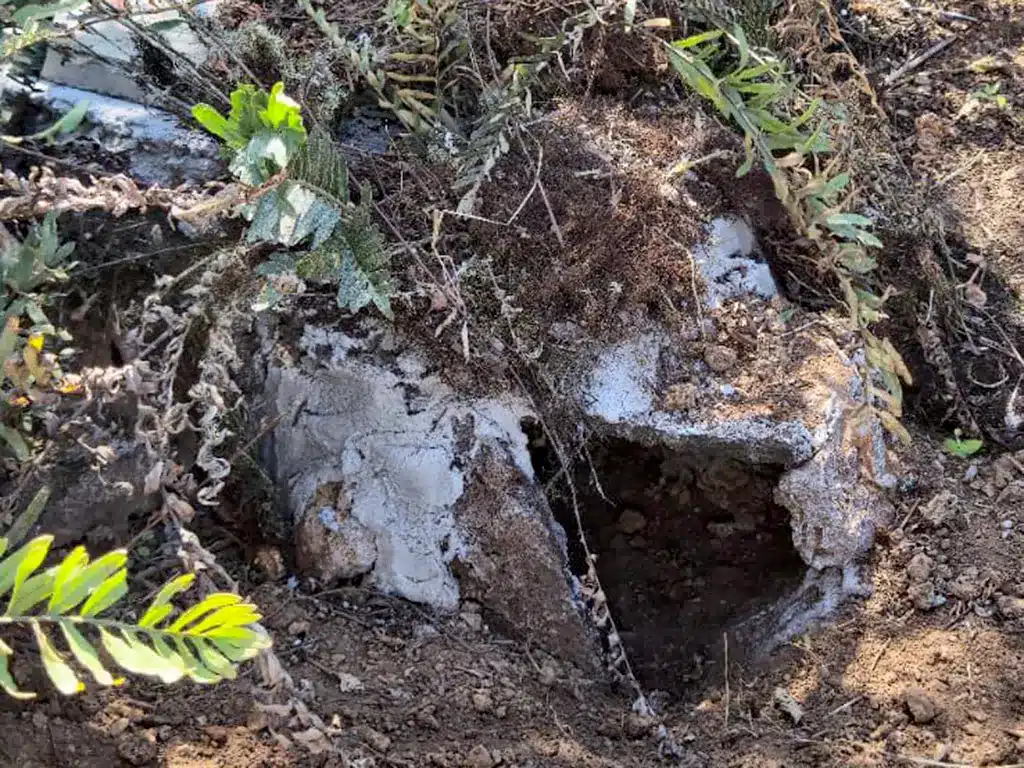 Artificial burrows provide predator-resistant nesting chambers while mimicking natural burrow architecture.
Artificial burrows are constructed to replicate the dimensions and structure of natural nest chambers: a tunnel approximately 1.5 meters long leading to an enlarged chamber where the egg is laid and incubated. These structures are built with durable materials resistant to collapse and incorporate predator-exclusion features such as baffles and entrance designs that permit adult petrels to enter but exclude larger predators.
The burrows are positioned in locations with appropriate microclimate conditions (temperature, humidity, drainage) and installed with entrance orientations that facilitate acoustic communication between arriving birds. Ongoing monitoring assesses occupancy rates, breeding success, and structural integrity to refine design and placement strategies.
The Camp’s dark-sky lighting also helps prevent disorientation in these nocturnal birds, while its quiet, remote surroundings minimize noise pollution. We also continue to manage introduced predators and invasive plant species on our property to maintain a safe environment for the nesting petrels.
The petrel nesting season on Santa Cruz typically begins in May, with courtship and attraction activity lasting for about a month, and well into June. During this period, birds return to land under the cover of darkness, and some continue searching for nesting sites throughout the season. A single egg hatches after 50 days and fledging takes around 100-120 days.
Timings vary between islands and years.
As this phase of the project is still delicate, we’re not arranging site visits at this time. Exceptions may be considered for dedicated bird enthusiasts, subject to Carolina’s guidance. In the meantime, all guests will have the opportunity to observe the nests and (hopefully!) their occupants up close via a live-stream camera, which we plan to install in their burrows in the coming weeks.
Perhaps only faintly, no more than you would hear any other nocturnal wildlife. The audio system used to attract returning petrels is placed on the far side of the perimeter wall, specifically to ensure it does not disturb guests.
One simple and impactful way to support this project is by purchasing items from the Precious Plastics Galápagos collection, available in our boutique shop. Founded by Carolina, this initiative transforms plastic waste collected across the Galápagos into handcrafted souvenirs.
Plastic ingestion is a serious threat to many seabirds, including petrels, with both macro and microplastics frequently found in their stomachs, causing internal injuries, blockages, and reduced survival rates.
By choosing one of these recycled pieces, you’re helping remove plastic from the islands and directly supporting petrel conservation, not just at Galapagos Safari Camp but across multiple nesting sites in the archipelago.
Effective conservation requires the participation and support of local communities. The Galápagos Petrel Project works closely with highland farmers, landowners, and residents to build awareness of the petrel’s ecological importance and vulnerability.
Educational initiatives include:
These efforts recognize that long-term conservation success depends on local communities seeing themselves as beneficiaries and partners in conservation, rather than being excluded from conservation decisions affecting their land and livelihoods.
This season has brought some encouraging signs. Carolina identified traces of petrel activity near the nesting burrows at Camp, including feathers and droppings. Although our motion-triggered camera hasn’t captured definitive footage yet, the evidence on the ground suggests that petrels may have returned, but simply avoided the camera’s field of view.
No successful nestings have been confirmed so far, but as Carolina explains, this is not unusual during the first year of an acoustic attraction program. It often takes multiple seasons for birds to fully commit to new or restored nesting sites.
We look forward to welcoming guests who are keen to witness this Galápagos story unfold alongside us.
The Galápagos Petrel project is carried out in collaboration with San Francisco University of Quito, and with financial support from the American Bird Conservancy.
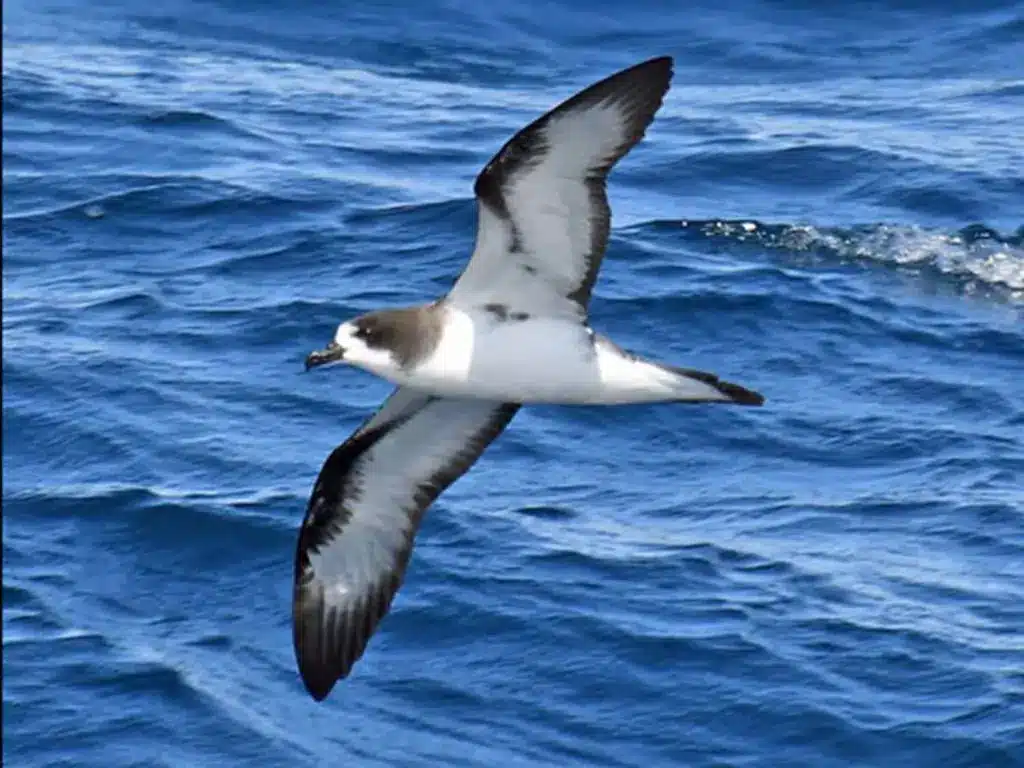
Only six nests recorded in Santa Cruz with zero successful fledglings due to introduced rat predation. Species feared extinct.
Galápagos Petrel recognized as distinct species (Pterodroma phaeopygia) by the American Ornithologists' Union following genetic and behavioral studies.
More than 700 nests documented in Media Luna colony and surrounding sites, demonstrating remarkable conservation success.
Active petrel burrows confirmed on Galapagos Safari Camp property with acoustic attraction system deployed.
Led by conservation biologist Carolina Proaño
Research collaboration and field studies
Financial support and technical guidance
On-site habitat restoration and acoustic attraction system
Galápagos Petrel
Pterodroma phaeopygia
Santa Cruz, Galápagos Islands
Supporting the recovery of a critically endangered endemic seabird through collaborative conservation on private land.
700+
Active Nests in Santa Cruz
30-40
Years Lifespan
5
Islands with Breeding Colonies
Your support enables critical conservation work including habitat restoration, predator management, acoustic attraction systems, and long-term monitoring. Together, we can ensure the survival of this remarkable endemic seabird.